What happens when artificial intelligence continues the narratives of our lives?
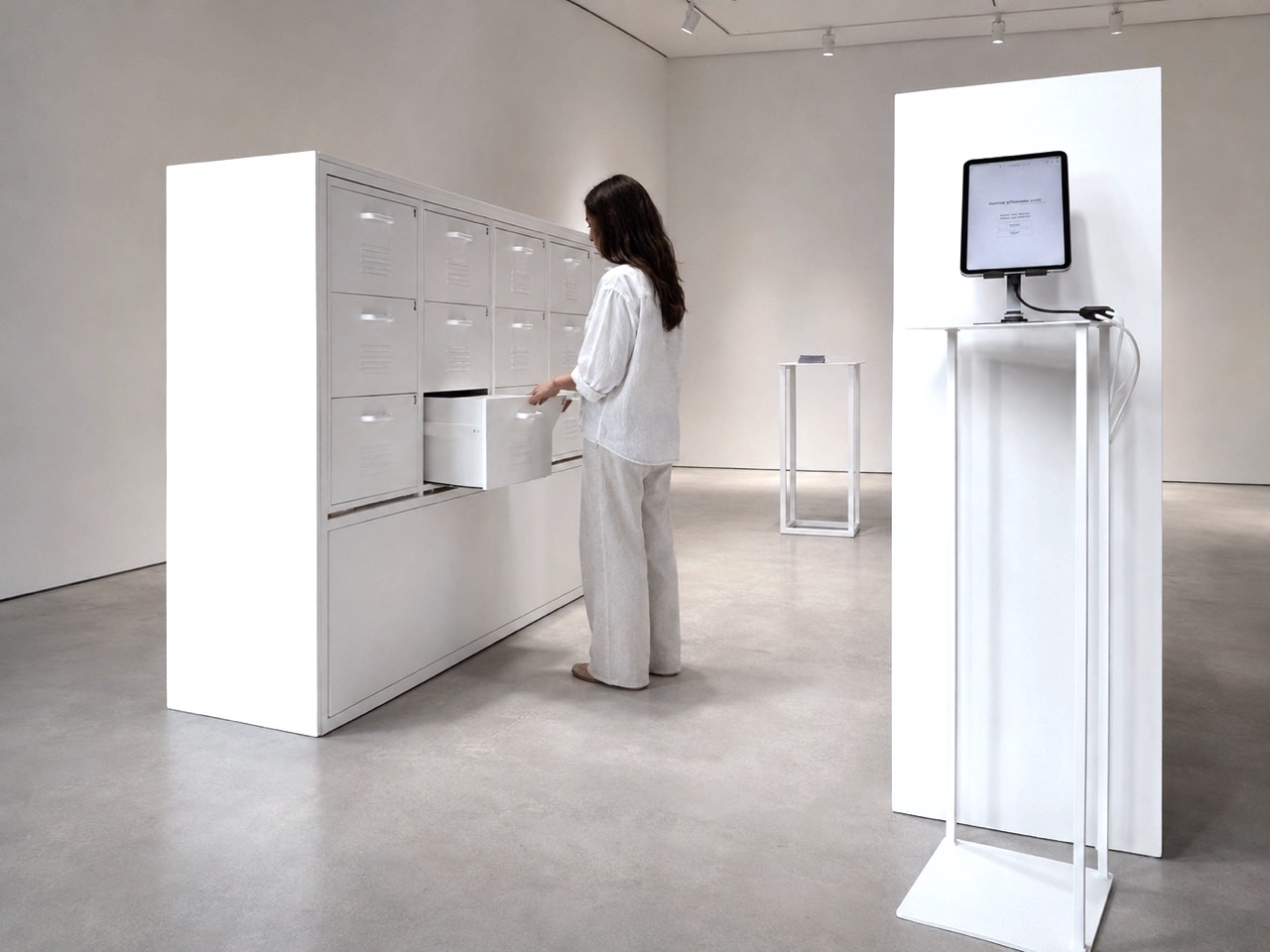
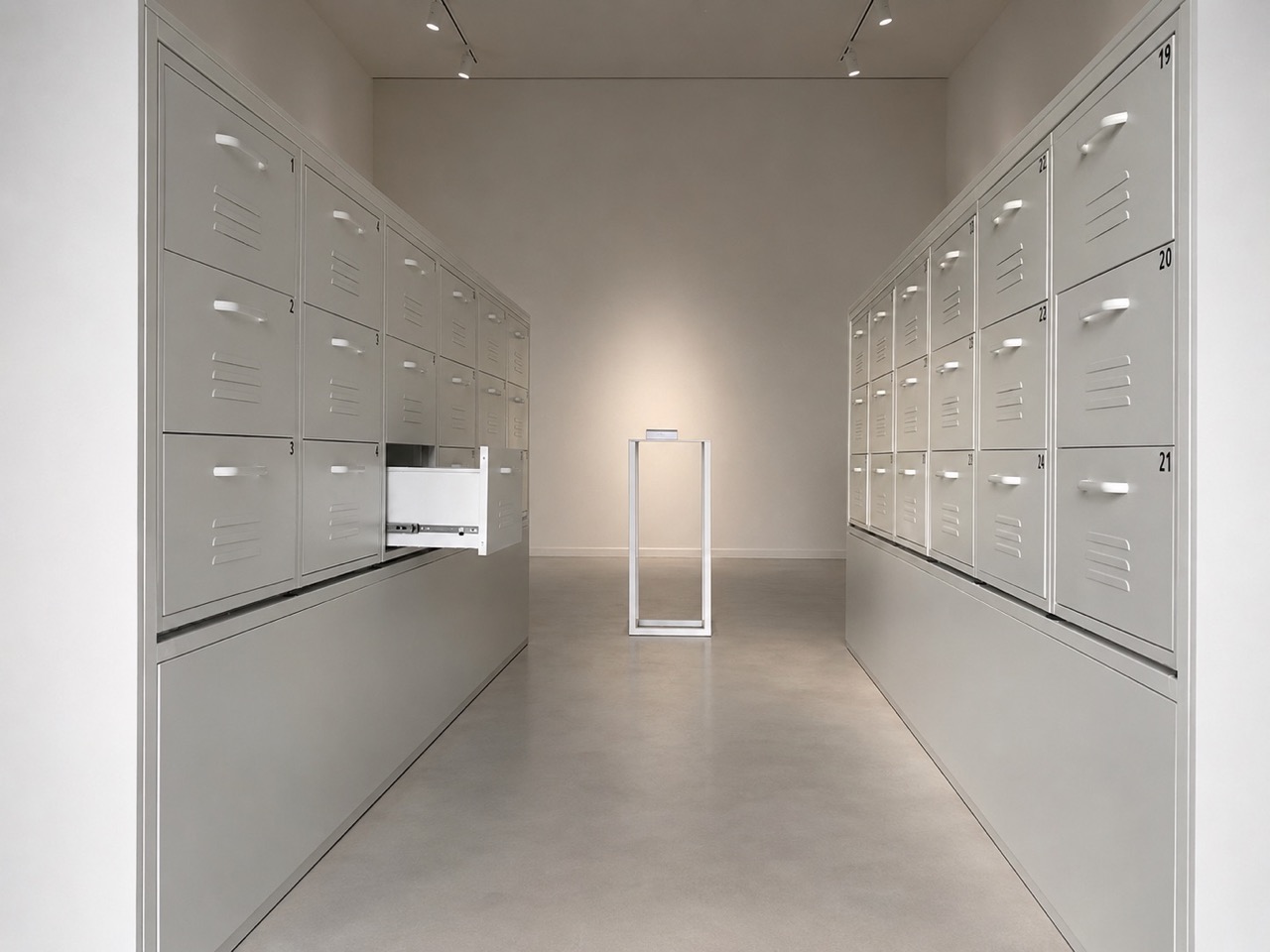
Archive of Possible Lives is an artistic research project exploring the intersection of artificial intelligence, biography and social imagination. It does not collect the past. It collects the potential: alternative biographies, unrealized decisions and paths a life might have taken.
At a moment when generative systems increasingly produce texts, images and descriptions of the self, the work asks how they shape our understanding of identity. AI describes the world not through truths, but through probabilities. What sounds plausible can begin to feel like memory.
The installation makes this shift physical. Each possible vita is neither true nor false. It is a walk-in hypothesis about who we might have been. The language model runs locally and autonomously within the installation: the possible biographies are generated inside the archive itself, not on a remote server.
More about the Archive
Artistic, technological and philosophical background to the work
Read the essay →One Life, Six Fragments
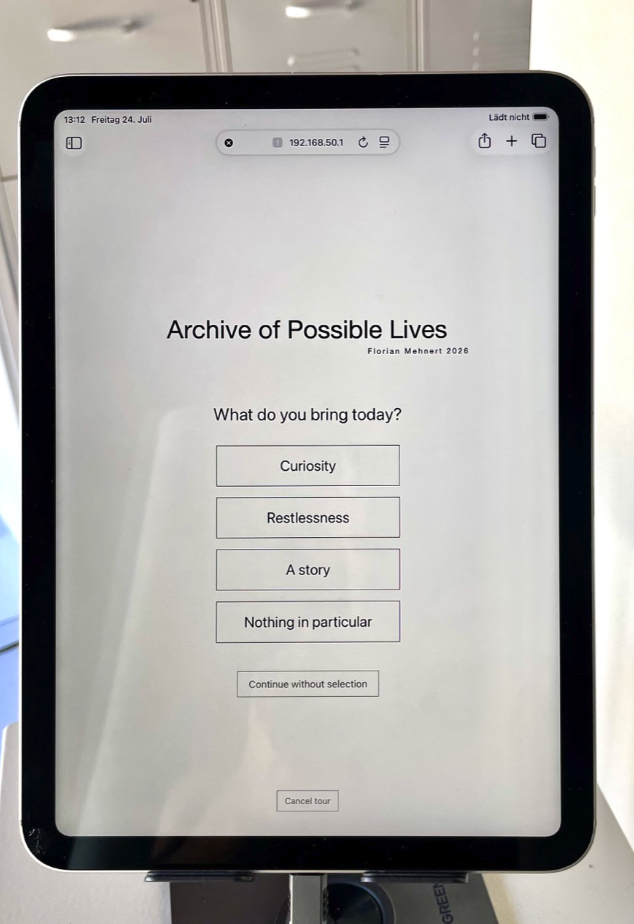
After entering a name or alias, the visitor begins a tour through six drawers. The archive is not connected to the internet and does not access any personal information. It knows only the name or alias entered by the visitor at the beginning.
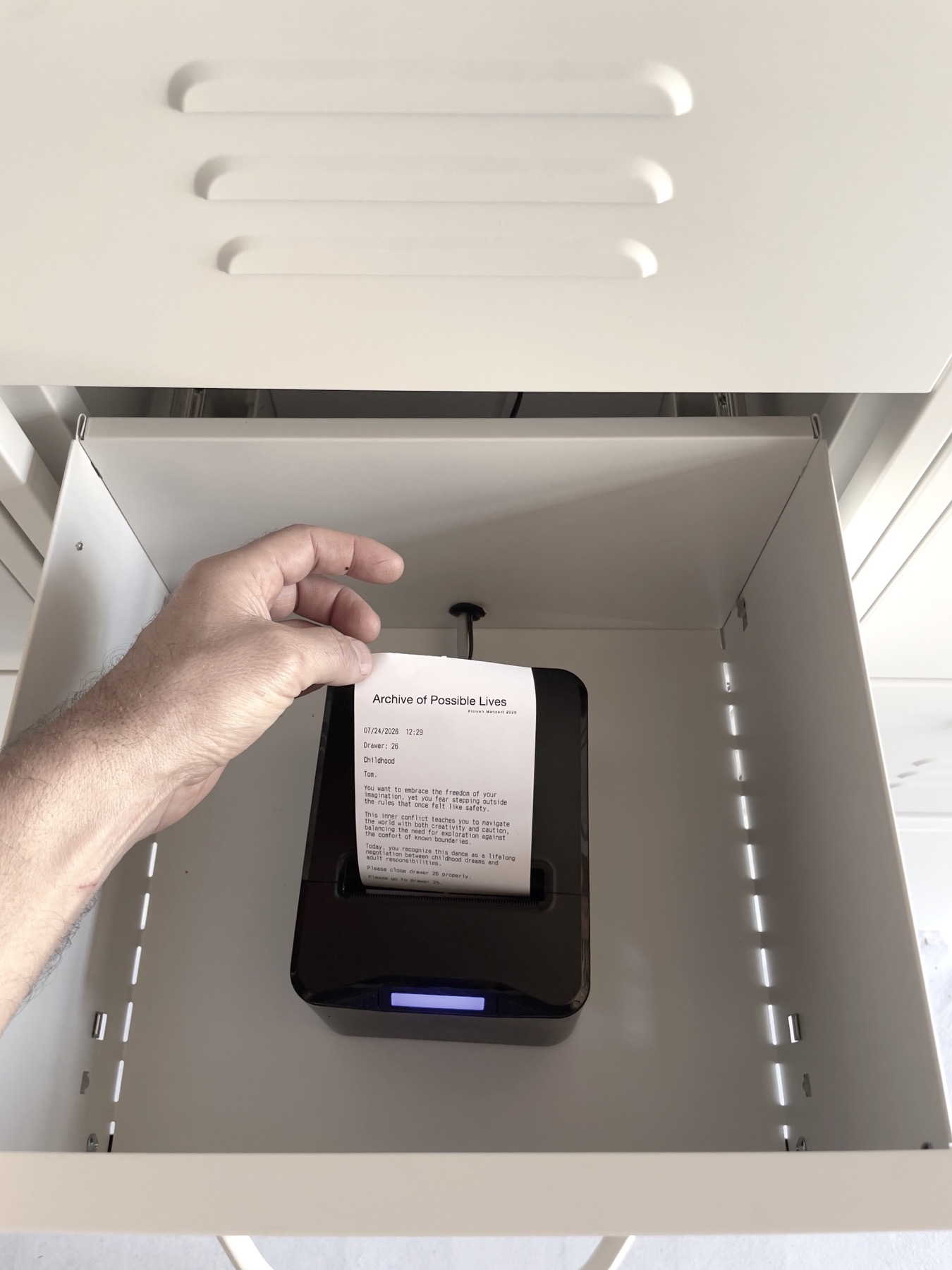
Each drawer reveals a new fragment of a possible biography, generated by a local language model – a memory of something that never happened, a trace of a life that might have been their own.
Step by step, a personal archive of unlived possibilities emerges. The language model knows nothing about the visitor and can nevertheless generate texts that feel personal, coherent or unexpectedly familiar. It becomes a speculative counterpart, producing possible life stories within the structure defined by the artist.
Archive of Possible Lives asks what happens when AI begins to continue the narratives of our lives without actually knowing us: Which stories emerge from statistical patterns? Which possibilities does it open up, which does it repeat or restrict – and how does our understanding of ourselves change when a machine narrates who we might have been?
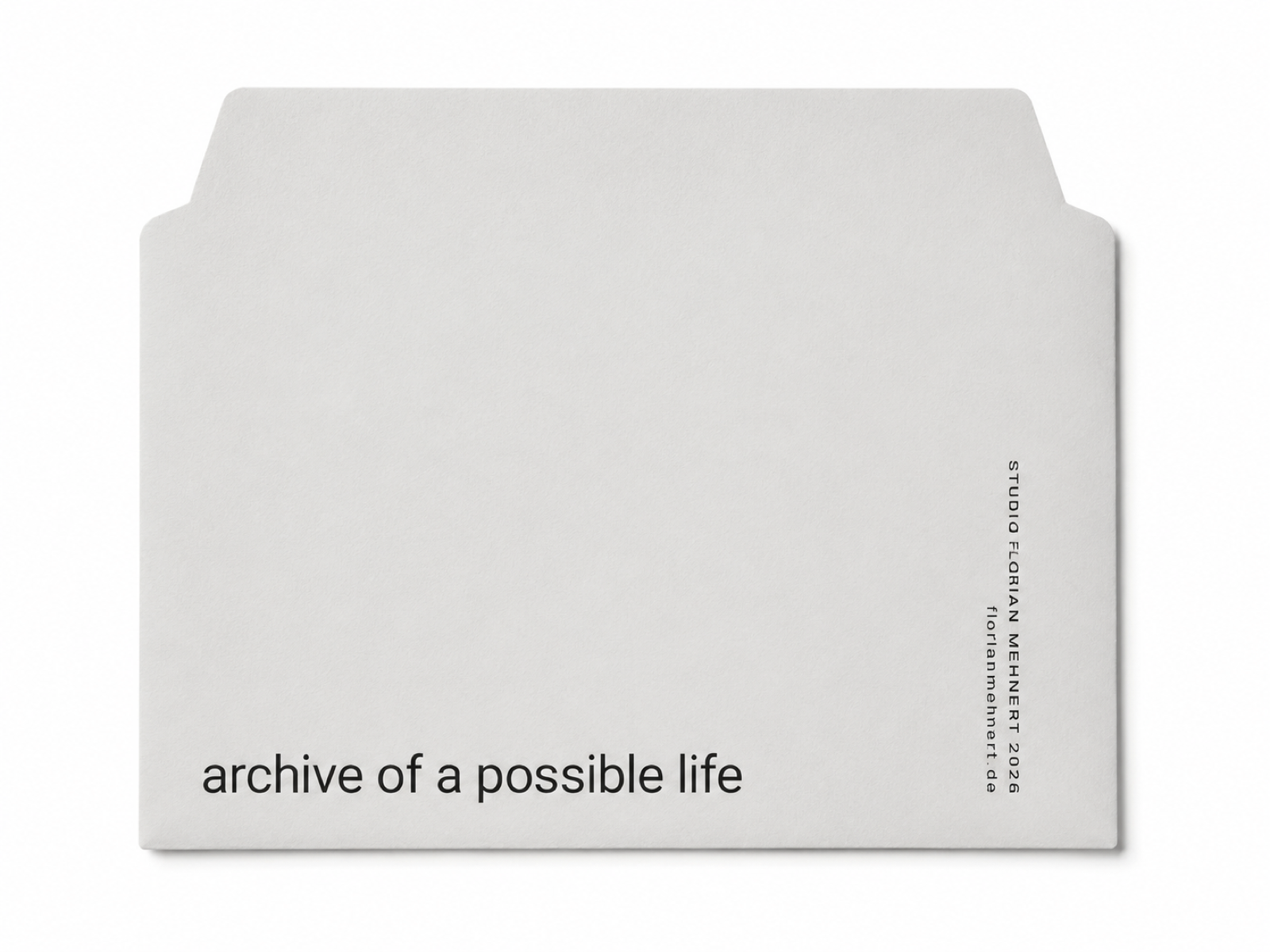
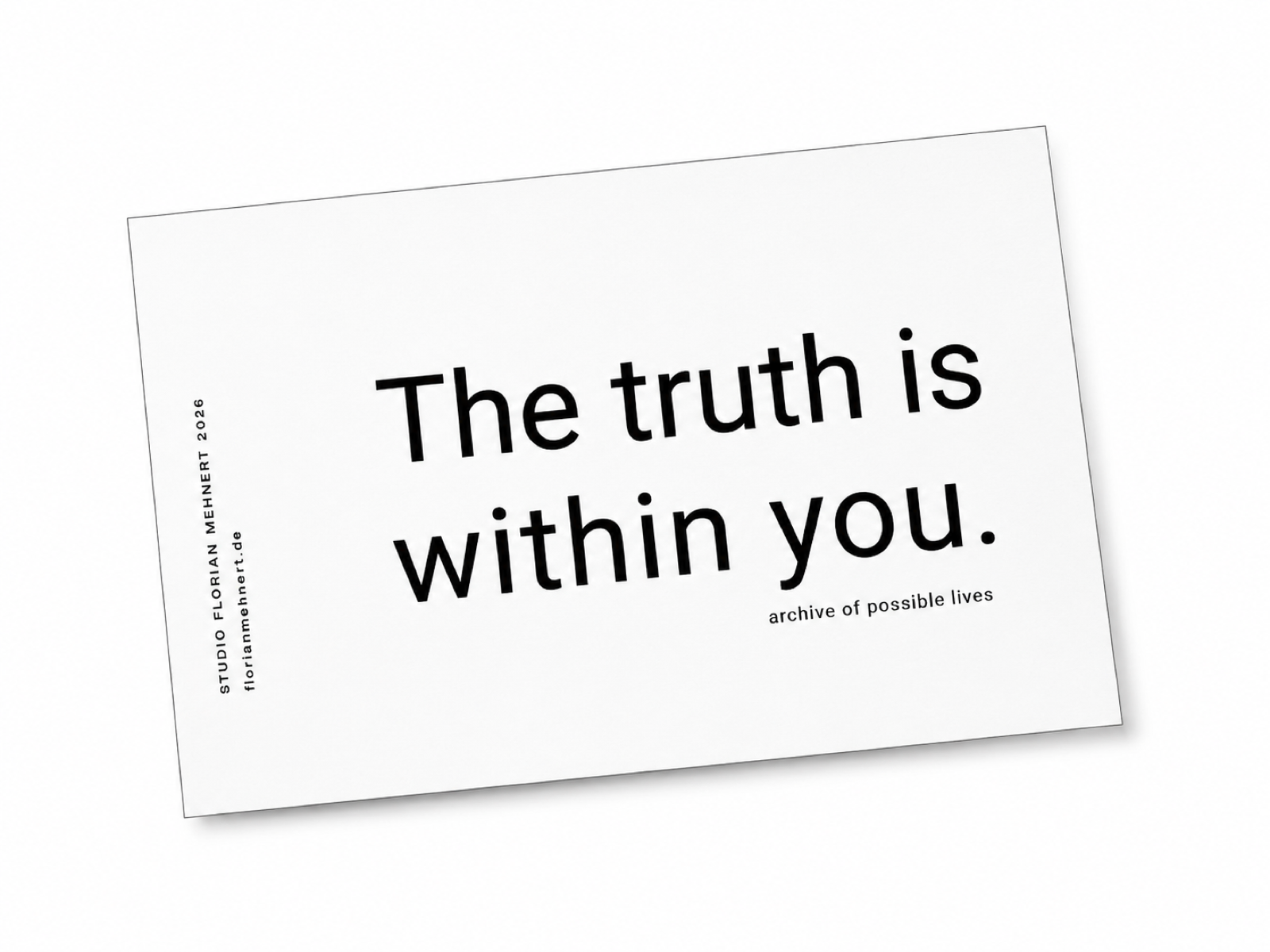
At the end, visitors take an envelope in which they can carry their printouts. The envelope contains a card. It bears the words: “The truth is within you.” The sentence does not oppose the machine’s narrative with a final certainty. Instead, it opens up a double examination of the concept of truth. AI can generate plausible connections while being factually wrong; it can assert with great confidence what never happened. At the same time, the card redirects the question towards one’s own perception: Which parts of the narrated biography do I recognise as coherent, which as projection – and which as false? Truth appears here neither as mere fact nor as purely inner feeling. It must be negotiated repeatedly within the tension between machine-generated assertion, lived experience and critical self-examination.
AI writes our biography — who might we become through that narrative?
The Narrative Machine Behind the Archive
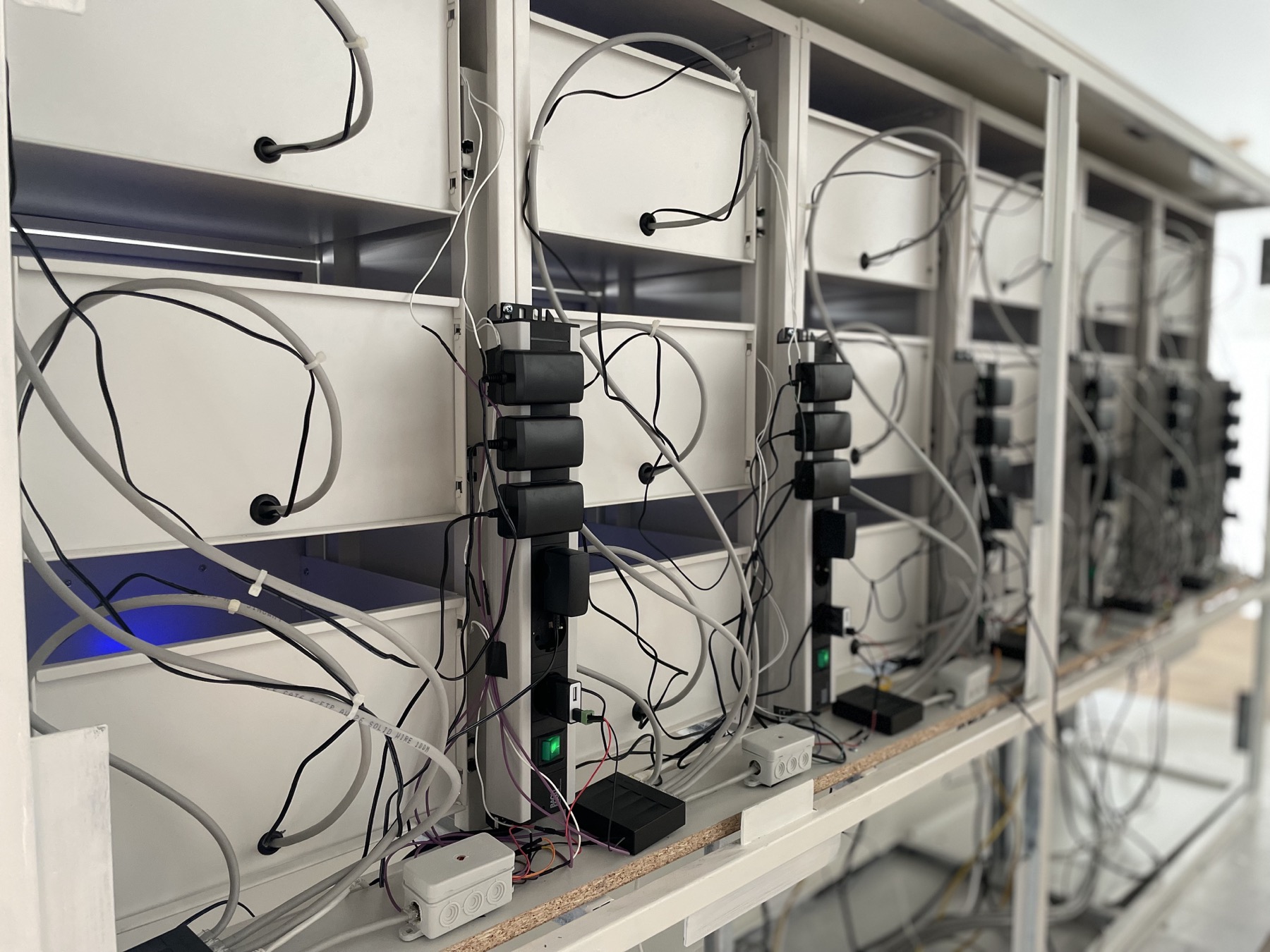
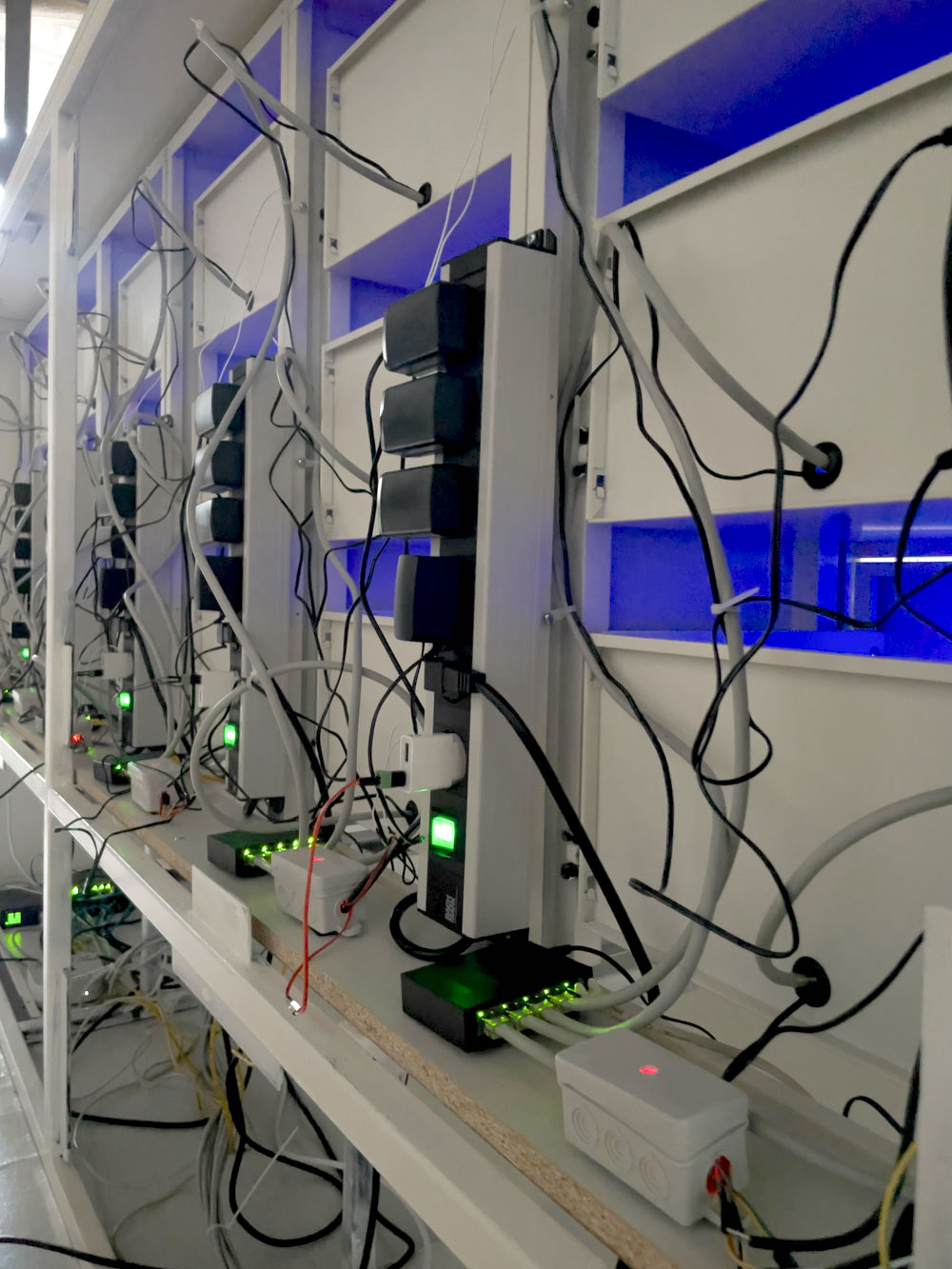
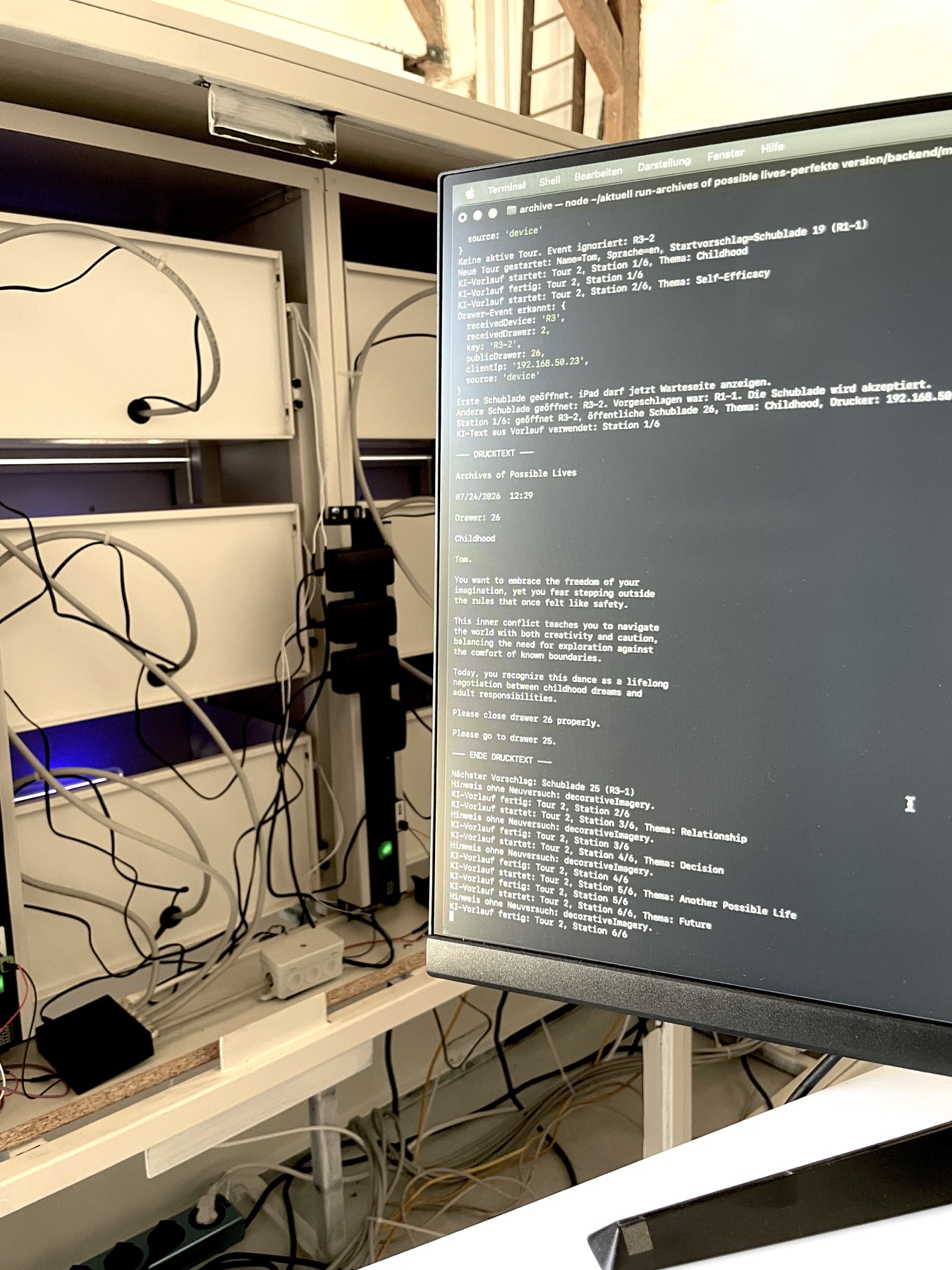
The visible order of the drawers conceals a networked system of sensors, thermal printers and a language model that runs locally and autonomously. When a visitor opens a drawer, the system registers the movement, continues the biographical narrative and prints the next fragment on site. The narrative is therefore generated within the material structure of the archive—not in a remote cloud.
From truth to probability
The installation approaches artificial intelligence not as a tool, but as a medium. It translates abstract processes of probability calculation into a physical and sensory experience. Identity appears not as a fixed biography, but as a space of variants.
The language model is not an invisible service outside the artwork, but part of its material construction. It runs locally on a computer within the installation and is connected to sensors, drawers and printers as an autonomous narrative machine. Computation, movement through space and the printed fragment form a single process.
A language model can adapt fragments to different languages and cultural contexts. It can refer to local places, everyday routines, social norms and narrative structures without naming them as explanation. The result is a set of plausible variations within a contextual field.
In this way, the archive becomes an artistic experiment and a social laboratory. It reveals how convincing algorithmic narratives can become—and opens the question of who will help write our biographies in the future.